

As QR codes become a standard way to connect users to digital content, security and privacy have become critical considerations. While QR codes themselves are not inherently unsafe, how they are created, managed, and deployed can introduce risks for both businesses and users.
This blog explains the key security and privacy aspects of QR codes, common risks to watch for, and best practices businesses should follow to protect trust and data.
Are QR Codes Secure by Default?
A QR code is simply a visual representation of data, most commonly a URL. On its own, it does not execute actions or collect information. The security risk lies in what the QR code points to and how that destination is managed. If a QR code links to a safe, controlled destination, it is secure. If it redirects to unknown or manipulated content, it can become a threat vector.
For businesses, this means QR code security is more about link management and governance than the code image itself.
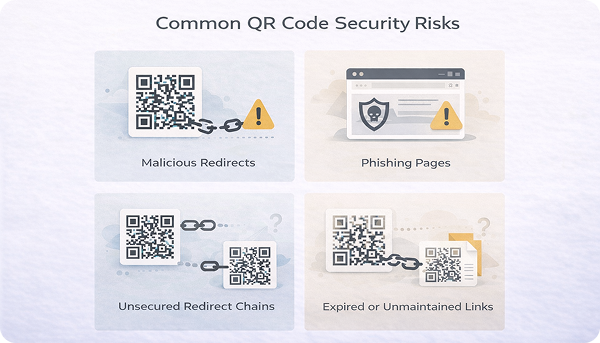
Common Security Risks Associated With QR Codes
Understanding potential risks helps businesses design safer QR experiences.
Malicious Redirects:
If QR codes are not monitored or protected, attackers can replace or overlay them with malicious versions that redirect users to phishing sites or harmful downloads.
Phishing and Fake Landing Pages:
QR codes can be used to disguise fraudulent websites that look legitimate, especially when users scan without previewing the URL.
Unsecured Redirect Chains:
Poorly managed redirects increase the risk of traffic being intercepted or altered before reaching the final destination.
Expired or Unmaintained Links:
Outdated QR links can lead to broken pages or domains that are later repurposed for malicious use.
Privacy Concerns Businesses Should Be Aware Of
QR codes often involve user interaction, which can raise privacy considerations depending on how data is collected.
Key privacy factors include:
- Whether scan data is logged or tracked.
- What user information is collected.
- How long scan data is stored.
- Who has access to analytics.
While analytics are valuable, businesses must ensure that data collection aligns with privacy expectations and regional regulations.
Dynamic QR Codes and Security Control
Dynamic QR codes offer better security control compared to static QR codes.
Because the destination can be updated, businesses can:
- Disable or redirect compromised links.
- Fix issues instantly without reprinting.
- Monitor unusual scan behavior.
- Maintain control over long-term deployments.
This makes dynamic QR codes a safer option for campaigns, packaging, and public-facing materials.
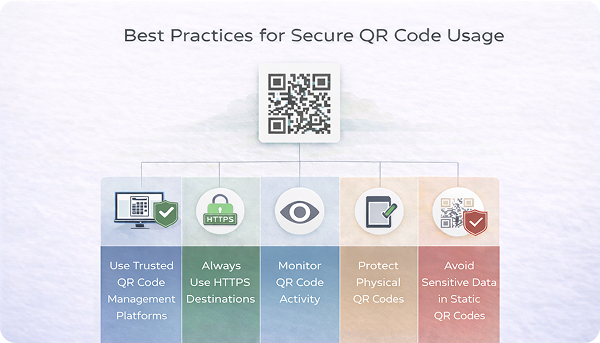
Best Practices for Secure QR Code Usage
Businesses can significantly reduce risk by following a few essential practices.
Use Trusted QR Code Management Platforms:
Avoid unmanaged or one-time QR generators for business-critical use cases. Centralized management improves control and visibility.
Always Use HTTPS Destinations:
Secure URLs protect users from interception and improve trust during redirection.
Monitor QR Code Activity:
Regularly review scan data to detect unusual spikes, geographic anomalies, or unexpected usage patterns.
Protect Physical QR Codes:
In public spaces, use tamper-resistant placements and periodically inspect codes to prevent physical replacement.
Avoid Sensitive Data in Static QR Codes:
Never encode confidential information directly into a static QR code.
Communicating Trust to Users
Users are becoming more cautious about scanning QR codes. Businesses should help users feel confident.
Ways to build trust include:
- Clear context near the QR code explaining its purpose.
- Consistent branding around placement.
- Clean, professional landing pages.
- Avoiding unnecessary permissions or pop-ups after scanning.
Compliance and Regulatory Considerations
Depending on region and industry, QR code usage may fall under data protection laws.
Businesses should ensure:
- Transparency about data collection.
- Compliance with local privacy regulations.
- Secure storage of scan analytics.
- Clear opt-in where required.
QR codes rely heavily on user trust. A single bad experience can discourage future scans and harm brand credibility. By prioritizing security and privacy, businesses not only protect users but also ensure long-term success and adoption of QR-based experiences.