
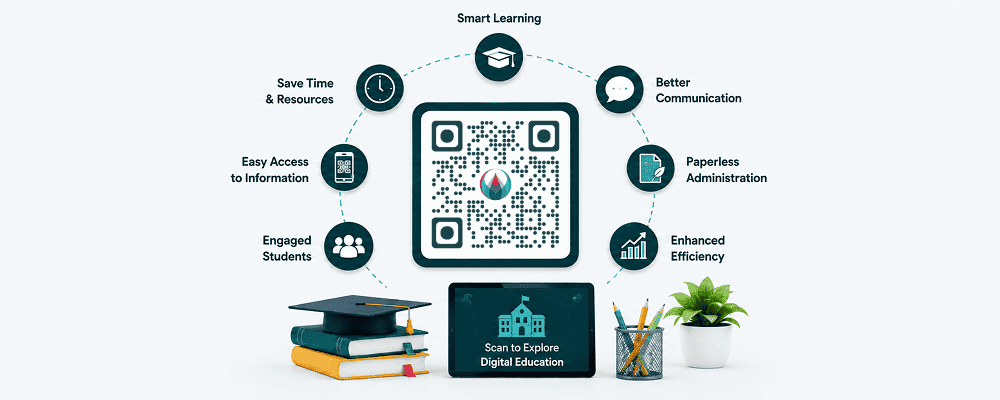
The education sector has rapidly embraced digital transformation in recent years. Schools, colleges, universities, coaching centers, and training institutes are continuously searching for innovative ways to improve learning experiences while simplifying administrative tasks.
One technology that has gained significant popularity in education is the QR Code (Quick Response Code). QR codes provide a simple, cost-effective, and efficient way to connect students, teachers, parents, and administrators with digital resources and information.
From accessing study materials and recording attendance to campus navigation and event management, QR codes are helping educational institutions become more organized, interactive, and student-friendly.
In this article, we’ll explore how educational institutions use QR codes for learning and administration, their benefits, practical use cases, and best practices for implementation.
What Are QR Codes?
QR codes are two-dimensional barcodes that can store various types of information, including:
- Website URLs
- Documents
- Videos
- Contact information
- Event registrations
- WiFi credentials
- Digital forms
- Learning resources
Students and staff can scan QR codes using a smartphone camera or QR code scanner app to instantly access information without manually typing long URLs.
This convenience makes QR codes a valuable tool for modern educational institutions.
Why Educational Institutions Are Adopting QR Codes
Traditional administrative processes often involve paperwork, manual data entry, printed materials, and repetitive tasks.
QR codes help institutions:
- Reduce paper usage
- Save time
- Improve communication
- Increase student engagement
- Simplify administrative operations
- Enhance accessibility of educational resources
As educational environments become increasingly digital, QR codes provide an easy bridge between physical and digital experiences.
Benefits of QR Codes in Education
1. Easy Access to Learning Resources
Teachers can place QR codes in:
- Textbooks
- Classroom presentations
- Worksheets
- Notice boards
- Assignments
Students simply scan the code to access:
- Study materials
- Lecture notes
- PDFs
- Educational websites
- Video tutorials
- Practice tests
This eliminates the need to manually search for resources online.
2. Improved Student Engagement
Interactive learning is more effective than traditional passive learning methods.
QR codes can link students to:
- Educational videos
- Interactive quizzes
- Virtual tours
- Learning games
- Multimedia content
This makes lessons more engaging and enjoyable while improving knowledge retention.
3. Reduced Paperwork
Educational institutions generate a large amount of paperwork daily.
QR codes can digitize:
- Forms
- Applications
- Surveys
- Feedback collection
- Student registrations
This helps reduce printing costs and supports environmentally friendly practices.
4. Faster Information Sharing
Instead of distributing printed handouts, institutions can use QR codes to instantly share:
- Timetables
- Announcements
- Event details
- Examination schedules
- Course materials
Students can access updated information anytime from their mobile devices.
5. Cost-Effective Technology
One of the biggest advantages of QR codes is affordability.
Educational institutions can create QR codes at minimal cost while achieving significant operational improvements.
This makes QR codes suitable for institutions of all sizes.
QR Codes for Learning and Classroom Activities
Accessing Digital Study Materials
Teachers often need to distribute learning resources to students.
QR codes can be attached to:
- Lesson plans
- Whiteboards
- Printed books
- Classroom posters
Students can instantly access:
- PDF documents
- Online notes
- Learning portals
- E-books
This creates a more organized learning environment.
Video-Based Learning
Educational videos help students understand complex topics more effectively.
Teachers can generate QR codes that link directly to:
- Recorded lectures
- Demonstrations
- Educational YouTube videos
- Subject-specific tutorials
Students can revisit these materials anytime for revision.
Interactive Assignments
QR codes can make assignments more engaging.
Examples include:
- Video-based homework
- Interactive quizzes
- Research activities
- Group projects
Students simply scan the QR code to begin the activity.
Virtual Classroom Resources
Many institutions use Learning Management Systems (LMS) such as:
- Google Classroom
- Moodle
- Canvas
- Microsoft Teams
QR codes provide quick access to classroom portals without requiring students to manually enter URLs.
QR Codes for Attendance Management
Attendance tracking is one of the most popular educational uses of QR codes.
How QR Code Attendance Works
- A unique QR code is generated.
- Students scan the code during class.
- Attendance is automatically recorded.
- Data is stored digitally.
Benefits include:
- Faster attendance tracking
- Reduced paperwork
- Improved accuracy
- Less administrative burden
Many universities and coaching centers have adopted QR code attendance systems to save valuable classroom time.
QR Codes for School and Campus Administration
Student Registration
Educational institutions often manage large volumes of student applications.
QR codes can direct applicants to:
- Admission forms
- Registration portals
- Payment pages
- Information brochures
This simplifies the enrollment process and reduces manual work.
Examination Management
QR codes can streamline examination-related activities.
Examples include:
- Admit cards
- Examination schedules
- Result portals
- Exam instructions
Students can access essential information instantly through a simple scan.
Fee Payment Systems
Schools and colleges can use QR codes for fee payments.
Benefits include:
- Faster transactions
- Reduced queues
- Improved payment tracking
- Contactless payment options
This provides greater convenience for students and parents.
Parent Communication
Strong communication between institutions and parents is essential.
QR codes can help parents access:
- Student progress reports
- Attendance records
- School announcements
- Parent-teacher meeting schedules
This improves transparency and engagement.
QR Codes for Campus Navigation
Large campuses can sometimes be difficult to navigate, especially for new students and visitors.
Institutions can place QR codes at:
- Campus entrances
- Buildings
- Departments
- Libraries
- Laboratories
Scanning the code can provide:
- Interactive maps
- Navigation instructions
- Building information
- Department contact details
This improves the visitor experience and reduces confusion.
QR Codes for Libraries
Libraries are increasingly adopting QR codes to improve accessibility.
Book Information
Students can scan QR codes attached to books to view:
- Book summaries
- Author details
- Related resources
- Online references
Digital Library Access
QR codes can provide instant access to:
- E-books
- Journals
- Research databases
- Academic publications
This helps students access valuable learning materials quickly.
QR Codes for Events and Activities
Educational institutions organize numerous events throughout the year.
Examples include:
- Seminars
- Workshops
- Sports events
- Cultural programs
- Graduation ceremonies
QR codes can simplify:
- Event registration
- Ticket verification
- Attendance tracking
- Feedback collection
This improves event management and participant experiences.
QR Codes for Feedback and Surveys
Student feedback plays an important role in improving educational quality.
QR codes can direct students to:
- Course evaluation forms
- Teacher feedback surveys
- Campus improvement surveys
- Event feedback forms
Benefits include:
- Higher response rates
- Faster data collection
- Real-time feedback analysis
This enables institutions to make informed decisions.
QR Codes for Emergency Information
Safety is a top priority for educational institutions.
QR codes can provide access to:
- Emergency contact numbers
- Safety guidelines
- Evacuation procedures
- Health resources
Students and staff can quickly access critical information when needed.
Best Practices for Using QR Codes in Education
Use Clear Instructions
Always include a call-to-action such as:
- Scan to Access Notes
- Scan for Attendance
- Scan to Register
- Scan to View Schedule
Clear instructions encourage more scans.
Keep QR Codes Visible
Place QR codes where students can easily find and scan them.
Examples include:
- Notice boards
- Classrooms
- Libraries
- Student portals
- Event posters
Test Before Publishing
Always test QR codes on multiple devices to ensure they work correctly.
Broken links can create frustration and reduce trust.
Use Dynamic QR Codes
Dynamic QR codes allow institutions to:
- Update content anytime
- Track scans
- Manage resources efficiently
This provides greater flexibility compared to static QR codes.
Ensure Mobile-Friendly Content
Most students access information using smartphones.
Make sure linked content is:
- Mobile responsive
- Fast loading
- Easy to navigate
This improves the overall user experience.
The Future of QR Codes in Education
As educational institutions continue their digital transformation journey, QR codes will play an even larger role in learning and administration.
Future applications may include:
- Smart classrooms
- AI-powered learning experiences
- Personalized educational content
- Advanced attendance systems
- Interactive campus experiences
QR codes offer a simple yet powerful way to connect physical learning environments with digital resources.
Conclusion
QR codes have become an essential tool for modern educational institutions. They improve learning experiences, simplify administrative tasks, enhance communication, and provide quick access to important information.
From classroom resources and attendance management to campus navigation and event registration, QR codes help schools, colleges, universities, and training centers operate more efficiently while creating a better experience for students, parents, and staff.
As education continues to embrace technology, QR codes will remain a valuable solution for bridging the gap between traditional learning and digital innovation.
Create Educational QR Codes with DigitalQR
Looking to create QR codes for your school, college, university, or training center?
DigitalQR helps educational institutions generate professional QR codes for learning resources, attendance tracking, registrations, event management, and much more—all from a single easy-to-use platform.