
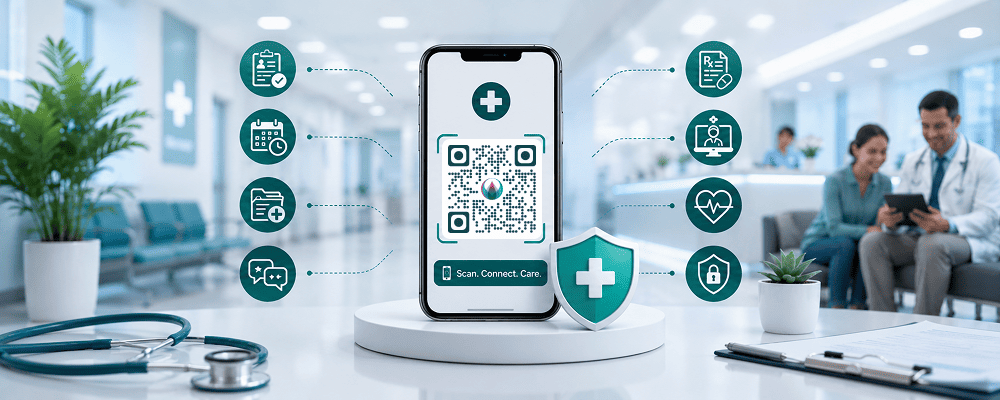
The healthcare industry is undergoing a rapid digital transformation. Patients today expect faster service, easier access to information, and more convenient healthcare experiences. At the same time, hospitals, clinics, and healthcare providers face increasing pressure to improve operational efficiency while maintaining high standards of patient care.
One simple yet powerful technology helping healthcare organizations achieve these goals is the QR code.
QR codes have evolved far beyond marketing applications. Healthcare facilities now use QR codes to simplify patient registration, improve communication, provide access to medical information, manage appointments, and reduce administrative burdens.
With just a smartphone scan, patients can instantly access important healthcare resources, while providers can streamline workflows and improve service delivery.
In this comprehensive guide, we’ll explore how QR codes are transforming healthcare and improving both patient experience and operational efficiency.
What Are Healthcare QR Codes?
Healthcare QR codes are scannable codes that connect patients, visitors, and healthcare professionals to digital information and services.
These QR codes can link to:
- Patient registration forms
- Appointment scheduling systems
- Medical records
- Prescription information
- Hospital maps
- Educational materials
- Feedback forms
- Telemedicine portals
Healthcare providers can place QR codes throughout hospitals, clinics, pharmacies, and medical offices to create seamless digital experiences.
Why QR Codes Are Important in Healthcare
Healthcare facilities often manage large volumes of patients, paperwork, and administrative processes.
Traditional systems can lead to:
- Long waiting times
- Manual data entry errors
- Increased paperwork
- Communication delays
- Higher operational costs
QR codes help eliminate many of these challenges by providing instant digital access to information and services.
Key Benefits
- Faster patient interactions
- Reduced administrative workload
- Improved patient satisfaction
- Better information accessibility
- Enhanced operational efficiency
- Reduced paper usage
- Increased patient engagement
1. Simplifying Patient Registration
Patient registration is often one of the most time-consuming processes in healthcare facilities.
Traditionally, patients fill out multiple forms manually before receiving treatment.
QR codes simplify this process.
Patients can scan a QR code and complete registration forms directly on their smartphones before arriving at the facility.
Benefits
- Reduced waiting times
- Faster check-in process
- Accurate data collection
- Less paperwork
Healthcare staff can focus more on patient care rather than administrative tasks.
2. Streamlining Appointment Scheduling
Managing appointments efficiently is essential for healthcare providers.
QR codes can direct patients to online appointment booking systems where they can:
- Schedule appointments
- Reschedule visits
- Cancel bookings
- View doctor availability
This self-service approach reduces the number of phone calls and administrative requests.
Benefits
- Improved scheduling efficiency
- Reduced no-shows
- Better patient convenience
3. Contactless Check-In
Many healthcare facilities now offer contactless check-in options.
Patients simply scan a QR code upon arrival and confirm their appointment details.
This approach is particularly valuable in:
- Hospitals
- Clinics
- Diagnostic centers
- Dental offices
Benefits
- Faster patient processing
- Reduced physical contact
- Improved patient flow
4. Easy Access to Medical Records
Patients often need access to their medical history, test results, and treatment information.
QR codes can provide secure access to:
- Lab reports
- Medical records
- Imaging results
- Vaccination records
Patients can retrieve information quickly without lengthy administrative procedures.
Benefits
- Better patient empowerment
- Faster information access
- Improved healthcare transparency
5. Digital Prescription Management
Prescriptions can be managed more efficiently using QR codes.
Doctors can generate QR codes that provide patients with:
- Prescription details
- Dosage instructions
- Medication information
- Pharmacy directions
Pharmacists can scan the code to retrieve accurate prescription information.
Benefits
- Reduced prescription errors
- Improved medication compliance
- Faster pharmacy processing
6. Patient Education and Awareness
Educating patients is an important part of healthcare delivery.
QR codes can link patients to educational content such as:
- Treatment guides
- Disease prevention information
- Recovery instructions
- Video tutorials
- Health awareness campaigns
Patients can access reliable information whenever needed.
Benefits
- Better patient understanding
- Increased treatment adherence
- Improved health outcomes
7. Hospital Navigation and Wayfinding
Large hospitals can be confusing for visitors and patients.
QR codes placed throughout the facility can provide:
- Interactive maps
- Department locations
- Navigation assistance
- Emergency routes
This helps patients find their destination quickly.
Benefits
- Reduced confusion
- Improved visitor experience
- Less staff assistance required
8. Telemedicine Access
Telemedicine has become an essential healthcare service.
QR codes can simplify access to:
- Virtual consultations
- Video appointments
- Telehealth platforms
- Online follow-up visits
Patients simply scan a QR code to join their appointment.
Benefits
- Convenient healthcare access
- Reduced travel requirements
- Improved patient engagement
9. Feedback Collection and Patient Surveys
Patient feedback helps healthcare providers improve services.
QR codes can direct patients to:
- Satisfaction surveys
- Feedback forms
- Service reviews
- Experience assessments
Patients can provide feedback immediately after their visit.
Benefits
- Higher response rates
- Better service improvement
- Valuable patient insights
10. Emergency Information Access
Healthcare facilities can use QR codes to provide instant access to emergency information.
This may include:
- Emergency contacts
- Medical history
- Allergy information
- Treatment protocols
In critical situations, rapid access to information can save valuable time.
Benefits
- Improved emergency response
- Better patient safety
- Faster treatment decisions
11. Vaccine and Immunization Records
Many healthcare providers use QR codes to manage vaccination records.
Patients can quickly access:
- Vaccination history
- Immunization certificates
- COVID-19 vaccination records
- Travel vaccination documentation
Benefits
- Easy record management
- Faster verification
- Convenient access
12. Laboratory and Diagnostic Services
Diagnostic centers can use QR codes to streamline testing processes.
Patients can:
- Access test instructions
- Download reports
- Schedule appointments
- Receive result notifications
Benefits
- Faster report delivery
- Reduced administrative effort
- Better patient experience
13. Healthcare Marketing and Communication
Healthcare organizations use QR codes in marketing campaigns to promote:
- Health awareness programs
- Wellness services
- Preventive screenings
- Community events
QR codes make it easier for patients to engage with healthcare initiatives.
Benefits
- Increased awareness
- Higher engagement
- Improved outreach effectiveness
14. Staff Training and Internal Communication
Healthcare facilities can use QR codes internally to provide staff access to:
- Training materials
- Safety procedures
- Compliance documents
- Operational guidelines
Employees can instantly access critical information when needed.
Benefits
- Better workforce training
- Faster information sharing
- Improved compliance
15. Contactless Payments and Billing
Healthcare providers can simplify billing through QR codes.
Patients can scan a code to:
- View invoices
- Make payments
- Download receipts
- Access billing information
Benefits
- Faster transactions
- Reduced administrative burden
- Improved payment collection
Why Dynamic QR Codes Are Ideal for Healthcare
While static QR codes work for basic applications, dynamic QR codes provide additional flexibility and control.
Advantages of Dynamic QR Codes
- Update information without changing the QR code
- Track scan activity
- Improve security management
- Monitor patient engagement
- Manage healthcare campaigns efficiently
Healthcare providers can continuously update resources while keeping the same QR code active.
Best Practices for Implementing QR Codes in Healthcare
Prioritize Data Security
Patient privacy must remain a top priority.
Ensure:
- Secure HTTPS connections
- Data encryption
- Compliance with healthcare regulations
Use Clear Instructions
Include simple calls-to-action such as:
- Scan to Book Appointment
- Scan to Access Reports
- Scan for Patient Guide
Ensure Mobile Optimization
All linked content should be mobile-friendly and load quickly.
Monitor Usage Analytics
Track scans to understand patient behavior and optimize services.
Regularly Update Content
Ensure all healthcare information remains accurate and current.
Future of QR Codes in Healthcare
As healthcare technology continues evolving, QR codes will become even more important.
Future applications may include:
- AI-powered patient support
- Smart hospital systems
- Personalized healthcare journeys
- Digital health passports
- Integrated wearable device management
Healthcare organizations that adopt QR code technology today will be better positioned for the future of patient-centered care.
Conclusion
QR codes are transforming healthcare by improving patient experience, reducing administrative burdens, and enhancing operational efficiency. From appointment scheduling and patient registration to telemedicine and medical record access, QR codes provide healthcare providers with a simple yet powerful tool for digital transformation.
By implementing QR code solutions strategically, hospitals, clinics, and healthcare organizations can create more convenient, efficient, and patient-friendly healthcare experiences while reducing costs and improving service quality.
As healthcare continues embracing digital innovation, QR codes will remain a key technology driving better communication, accessibility, and patient outcomes.
Frequently Asked Questions (FAQs)
Are QR codes safe for healthcare use?
Yes. When implemented with proper security measures and encrypted connections, QR codes are safe and highly effective in healthcare environments.
Can QR codes reduce patient waiting times?
Absolutely. QR codes streamline registration, check-in, and appointment scheduling processes, significantly reducing wait times.
What type of QR code is best for healthcare providers?
Dynamic QR codes are generally the best choice because they allow content updates, tracking, and better management.
Can QR codes improve patient engagement?
Yes. QR codes provide instant access to healthcare resources, educational materials, and communication channels, increasing engagement.
Do QR codes help reduce paperwork?
Yes. Digital forms, records, and information access significantly reduce paper-based processes and administrative workload.