
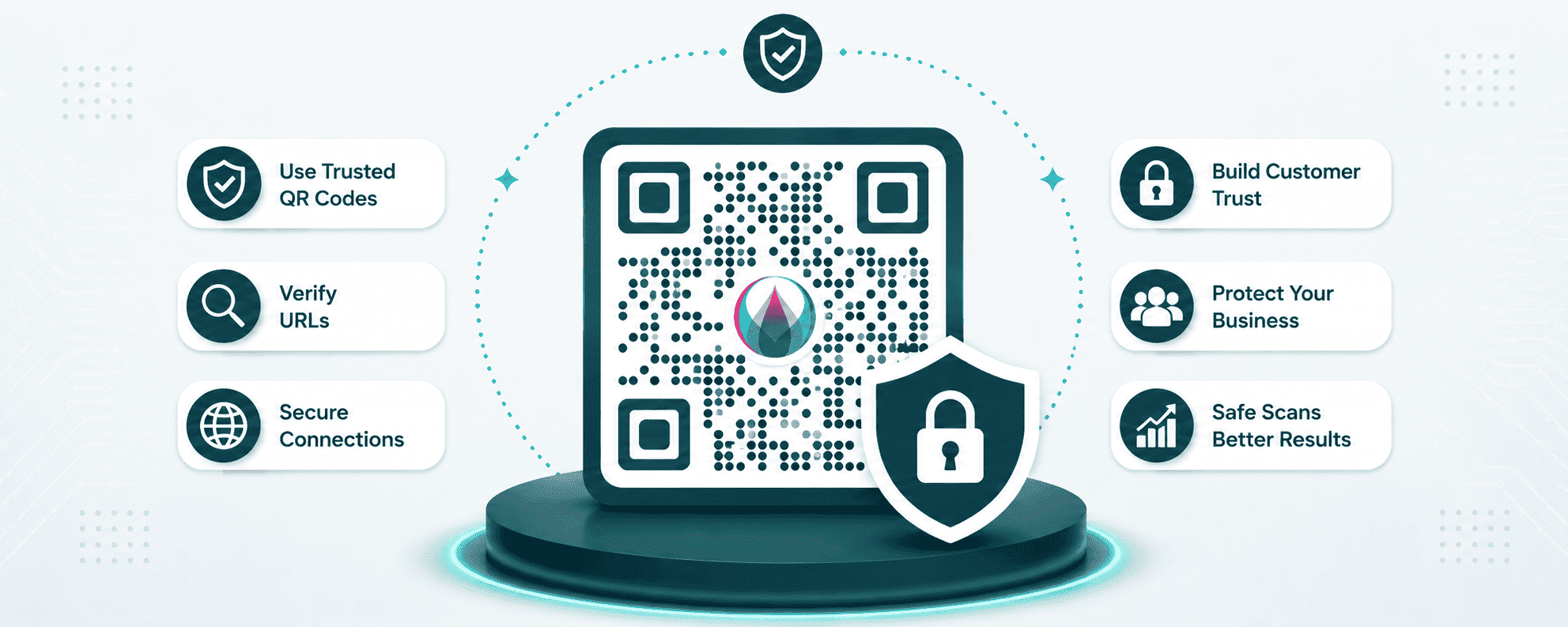
QR codes have become a standard part of modern business. From digital payments and restaurant menus to event tickets and marketing campaigns, QR codes offer a fast and convenient way to connect customers with digital content.
However, as QR code usage continues to grow, many people ask an important question:
Are QR codes safe?
The short answer is yes—QR codes themselves are safe. However, like any technology that directs users to websites or digital content, they can be misused by scammers and cybercriminals.
In this guide, we’ll explore QR code security, common risks, real-world threats, and best practices businesses can follow to protect their customers.
What Is a QR Code?
A QR (Quick Response) code is a two-dimensional barcode that stores information such as:
- Website URLs
- Contact information
- Payment details
- WiFi credentials
- Product information
- Event tickets
- Mobile app download links
When scanned using a smartphone camera, the QR code instantly opens the stored content.
Businesses use QR codes because they simplify customer interactions and eliminate the need for manual typing.
Are QR Codes Safe?
The QR code itself is simply a way to store information.
A QR code cannot:
- Hack a phone directly
- Install malware automatically
- Access personal data by itself
The real security concern comes from where the QR code directs users after scanning.
If a QR code leads to a malicious website or fraudulent payment page, users may unknowingly share sensitive information.
Therefore, QR codes are generally safe when created and used responsibly.
Why QR Code Security Matters
Millions of QR codes are scanned every day worldwide.
Businesses use them for:
- Marketing campaigns
- Contactless payments
- Digital menus
- Customer support
- Product information
Because customers trust QR codes, cybercriminals sometimes attempt to exploit that trust.
Protecting QR code security helps businesses:
- Build customer confidence
- Protect brand reputation
- Prevent fraud
- Improve customer experience
- Reduce cybersecurity risks
Common QR Code Security Risks
1. Fake QR Codes
One of the most common scams involves replacing legitimate QR codes with fake ones.
For example:
A scammer may place a sticker containing a fake QR code over an existing payment QR code.
When customers scan it, they are redirected to a fraudulent payment page.
This type of attack is often called QR Code Tampering.
2. Phishing Websites
Phishing is a cyberattack where users are tricked into entering sensitive information.
A malicious QR code may direct users to a fake website that looks legitimate.
Users may unknowingly provide:
- Login credentials
- Credit card information
- Banking details
- Personal information
Because smartphones display websites differently than desktops, users may be less likely to notice suspicious URLs.
3. Fraudulent Payment QR Codes
QR code payments are extremely popular.
Unfortunately, scammers sometimes create fake payment QR codes to redirect funds to unauthorized accounts.
Businesses should always verify payment QR codes before displaying them publicly.
4. Malicious App Downloads
Some QR codes may direct users to unofficial app download pages.
Downloading apps from untrusted sources can expose devices to:
- Malware
- Spyware
- Data theft
- Security vulnerabilities
Businesses should always link to official app stores.
5. Data Collection Abuse
Certain QR codes may collect excessive user information without clear disclosure.
Businesses should be transparent about:
- What data is collected
- Why data is collected
- How data is used
Transparency helps build trust with customers.
How Businesses Can Use QR Codes Safely
Verify All Destination URLs
Before publishing a QR code:
- Test it thoroughly
- Check the destination page
- Confirm the website uses HTTPS
- Verify the content is correct
A simple test can prevent costly mistakes.
Use Dynamic QR Codes
Dynamic QR codes provide additional security advantages.
Benefits include:
- Editable destinations
- Scan tracking
- Link management
- Quick updates if issues are discovered
If a destination URL changes or becomes compromised, businesses can update it without reprinting the QR code.
Monitor Scan Analytics
Businesses using dynamic QR codes can monitor:
- Number of scans
- Device types
- Geographic locations
- Scan times
Unusual activity may indicate abuse or suspicious behavior.
Analytics help identify potential security issues early.
Protect Physical QR Codes
Physical QR codes displayed in public locations should be checked regularly.
Examples include:
- Restaurant tables
- Posters
- Store counters
- Event banners
Inspect them periodically to ensure they have not been replaced or altered.
Use Trusted QR Code Generators
Always create QR codes using reputable platforms.
Reliable QR code generators provide:
- Secure infrastructure
- Dynamic QR code support
- Analytics
- HTTPS protection
- Professional management tools
Businesses should avoid unknown or untrusted QR code services.
Best Practices for Customers
Businesses can also educate customers on safe QR code usage.
Check URLs Before Visiting
Most smartphones display the destination URL before opening it.
Customers should:
- Verify the domain name
- Look for HTTPS security
- Avoid suspicious websites
Avoid Unknown QR Codes
Users should be cautious when scanning QR codes found in:
- Public places
- Unverified advertisements
- Suspicious emails
- Random social media posts
Only scan QR codes from trusted sources.
Be Careful with Payments
Before making a payment:
- Verify the recipient
- Confirm payment details
- Check business branding
A few seconds of verification can prevent fraud.
Keep Devices Updated
Security updates help protect smartphones from vulnerabilities.
Customers should regularly update:
- Operating systems
- Browsers
- Security software
- Mobile applications
Benefits of Secure QR Code Implementation
When businesses prioritize security, they gain several advantages.
Increased Customer Trust
Customers are more likely to engage with QR codes they trust.
Better Brand Reputation
Secure experiences strengthen brand credibility.
Higher Engagement Rates
Customers scan QR codes more confidently when they know the destination is safe.
Reduced Risk of Fraud
Security measures help prevent unauthorized use and financial loss.
Future of QR Code Security
As QR code adoption continues to grow, security technologies are evolving as well.
Emerging trends include:
- Secure dynamic QR codes
- Advanced scan analytics
- AI-powered fraud detection
- Encrypted QR code solutions
- Improved authentication systems
Businesses that stay informed about security best practices will be better positioned to protect their customers.
Frequently Asked Questions
Can a QR code hack my phone?
No. A QR code itself cannot hack your phone. The risk comes from malicious websites or content that the QR code may direct users to.
Are payment QR codes safe?
Yes, when provided by trusted businesses and verified payment providers.
What is a dynamic QR code?
A dynamic QR code allows businesses to change the destination URL and track scan analytics after the QR code has been created.
How can I identify a fake QR code?
Check for stickers placed over existing QR codes, suspicious URLs, and unusual payment requests.
Should businesses use dynamic QR codes?
Yes. Dynamic QR codes provide flexibility, analytics, and additional security management capabilities.
Final Thoughts
QR codes are one of the most effective tools for connecting the physical and digital worlds. They simplify payments, marketing, customer engagement, and information sharing.
While QR codes themselves are safe, businesses and customers should remain aware of potential security risks. By following best practices such as verifying URLs, using trusted QR code generators, monitoring analytics, and protecting physical QR codes, organizations can create safer and more reliable experiences.
As QR code adoption continues to expand, prioritizing security will become increasingly important for businesses looking to build trust and drive long-term success.
Create Secure QR Codes with DigitalQR
Looking for a reliable QR code platform with dynamic QR codes, analytics, and business-ready features?
Visit DigitalQR and create professional QR codes designed for modern businesses.