
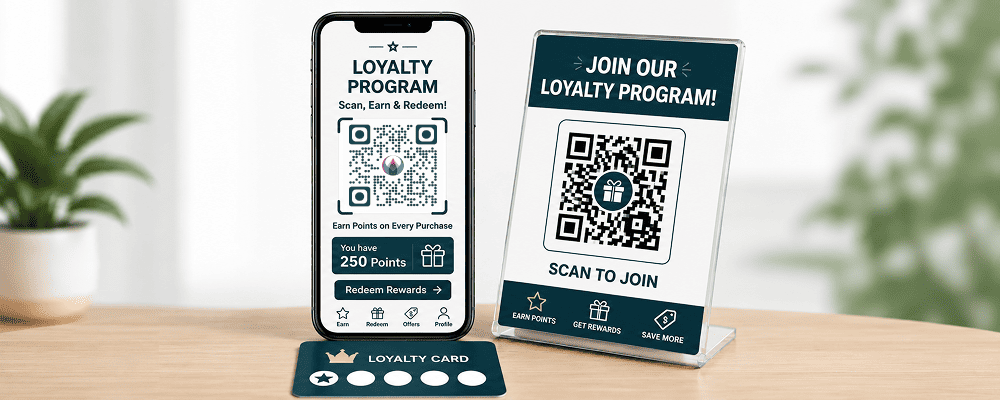
Acquiring new customers is important for every business, but retaining existing customers is often even more valuable. Studies consistently show that retaining customers costs significantly less than acquiring new ones, and loyal customers tend to spend more over time.
This is why loyalty programs have become a key strategy for businesses across industries. From coffee shops and restaurants to retail stores and e-commerce brands, businesses use loyalty programs to reward customers and encourage repeat purchases.
Today, QR codes are transforming traditional loyalty programs by making them easier to manage, more convenient for customers, and more effective for businesses.
In this guide, we’ll explore how QR codes enhance loyalty programs, the benefits they offer, real-world use cases, and best practices for implementation.
What Are QR Code Loyalty Programs?
A QR code loyalty program uses QR codes to track customer interactions, reward purchases, and simplify participation in loyalty campaigns.
Instead of carrying physical loyalty cards, customers simply scan a QR code using their smartphone to:
- Earn points
- Redeem rewards
- Access exclusive offers
- Join loyalty programs
- Track progress
- Receive personalized promotions
This digital approach creates a seamless customer experience while reducing administrative work for businesses.
Why Customer Retention Matters
Many businesses focus heavily on attracting new customers, but customer retention often provides greater long-term value.
Benefits of customer retention include:
- Higher lifetime customer value
- Increased repeat purchases
- Reduced marketing costs
- Stronger brand loyalty
- More referrals and recommendations
- Better customer relationships
When customers feel rewarded and appreciated, they are more likely to return.
This is where QR code loyalty programs can make a significant impact.
How QR Codes Improve Loyalty Programs
Traditional loyalty programs often rely on:
- Paper punch cards
- Membership cards
- Manual tracking systems
These methods can be inconvenient and difficult to manage.
QR codes simplify the process by digitizing the entire customer journey.
Customers can scan a code and instantly interact with the loyalty system without needing additional apps or physical cards.
Benefits of QR Codes for Loyalty Programs
1. Easy Customer Enrollment
Many customers avoid loyalty programs because registration processes can be time-consuming.
A QR code can instantly direct customers to:
- Registration forms
- Membership sign-up pages
- Mobile loyalty platforms
This reduces friction and increases participation rates.
For example, a restaurant can place a QR code on tables with the message:
“Scan to Join Our Rewards Program.”
Customers can enroll within seconds.
2. Paperless Loyalty Cards
Traditional loyalty cards are easily lost or forgotten.
QR codes eliminate this issue by providing digital access to loyalty programs through smartphones.
Benefits include:
- No printing costs
- No lost cards
- Better customer convenience
- Improved sustainability
Customers always have access to their rewards program.
3. Faster Reward Redemption
One of the biggest frustrations customers face is redeeming rewards.
QR codes simplify redemption by allowing customers to:
- Scan and claim rewards
- Access discount coupons
- Redeem points instantly
- Unlock exclusive offers
This improves the customer experience and encourages repeat visits.
4. Personalized Customer Experiences
Dynamic QR codes can help businesses deliver personalized experiences.
Customers may receive:
- Birthday discounts
- Exclusive offers
- Product recommendations
- VIP promotions
Personalization increases engagement and customer satisfaction.
5. Increased Customer Engagement
QR codes encourage customers to interact with brands more frequently.
Businesses can use QR codes to:
- Launch promotions
- Run contests
- Collect feedback
- Offer bonus rewards
These interactions strengthen customer relationships and boost loyalty.
Industries Using QR Code Loyalty Programs
Restaurants and Cafes
Restaurants are among the biggest adopters of QR code loyalty programs.
Examples include:
- Earn points for every meal
- Collect rewards after multiple visits
- Access special menu offers
- Receive birthday rewards
Instead of paper punch cards, customers simply scan a QR code after each purchase.
Retail Stores
Retail businesses use QR codes to:
- Reward repeat purchases
- Offer exclusive discounts
- Promote seasonal campaigns
- Encourage customer engagement
Customers can easily access rewards without carrying physical membership cards.
Beauty Salons and Spas
Salons often use loyalty programs to increase repeat bookings.
QR code rewards may include:
- Free treatments
- Service upgrades
- Referral bonuses
- Discount coupons
This encourages customers to return regularly.
Fitness Centers and Gyms
Gyms can use QR codes to reward:
- Membership renewals
- Class attendance
- Referrals
- Personal training sessions
Loyalty incentives help improve member retention rates.
E-commerce Businesses
Online stores can integrate QR codes into:
- Product packaging
- Order confirmations
- Loyalty campaigns
Customers can scan the code and receive:
- Future discounts
- Reward points
- Exclusive offers
This helps encourage repeat purchases.
Popular QR Code Loyalty Program Strategies
Points-Based Rewards
Customers earn points for purchases.
Examples:
- 1 point per dollar spent
- 100 points = $10 reward
QR codes make point collection simple and automatic.
Visit-Based Rewards
Customers earn rewards after a certain number of visits.
Example:
- Buy 9 coffees
- Get the 10th free
QR codes can track visits digitally.
Referral Programs
Businesses can reward customers for referring friends.
A QR code can:
- Share referral links
- Track referrals
- Award bonus points
Referral programs help businesses grow organically.
VIP Membership Programs
QR codes can provide access to premium customer benefits.
Examples include:
- Early access to sales
- Exclusive discounts
- Member-only events
VIP programs strengthen brand loyalty.
How Dynamic QR Codes Improve Loyalty Programs
Dynamic QR codes offer advanced features that enhance loyalty programs.
Benefits include:
Editable Campaigns
Businesses can update offers without replacing QR codes.
Scan Tracking
Track customer interactions and campaign performance.
Customer Insights
Understand customer behavior and preferences.
Flexible Marketing
Adjust campaigns based on results and feedback.
Dynamic QR codes provide far greater flexibility than static QR codes.
Best Practices for QR Code Loyalty Programs
Use Clear Call-to-Actions
Customers should immediately understand what happens after scanning.
Examples:
- Scan to Earn Rewards
- Join Our Loyalty Program
- Unlock Exclusive Discounts
- Start Collecting Points Today
Clear messaging improves scan rates.
Place QR Codes Strategically
Display QR codes in highly visible locations.
Examples:
- Checkout counters
- Restaurant tables
- Product packaging
- Receipts
- Store entrances
Visibility increases participation.
Offer Meaningful Rewards
Customers are more likely to engage when rewards provide real value.
Examples:
- Discounts
- Free products
- Exclusive access
- Bonus points
The better the reward, the stronger the retention.
Keep the Process Simple
Avoid lengthy registration forms and complicated redemption systems.
The fewer steps required, the higher participation rates.
Track Performance
Businesses should monitor:
- Scans
- Sign-ups
- Redemptions
- Customer engagement
Analytics help optimize loyalty campaigns.
Common Mistakes to Avoid
Making Rewards Difficult to Earn
If rewards take too long to achieve, customers may lose interest.
Provide attainable milestones.
Using Poorly Designed QR Codes
Low-quality QR codes can reduce scan success.
Always test QR codes before deployment.
Ignoring Mobile Optimization
Most customers scan QR codes using smartphones.
Ensure landing pages are mobile-friendly.
Failing to Promote the Program
Many loyalty programs fail because customers don’t know they exist.
Promote QR codes through:
- Signage
- Emails
- Social media
- Receipts
Measuring Loyalty Program Success
Key performance metrics include:
Enrollment Rate
How many customers join the program?
Repeat Purchase Rate
How often do members return?
Reward Redemption Rate
Are customers using rewards?
Customer Lifetime Value
How much revenue does each customer generate over time?
Engagement Rate
How frequently do customers interact with loyalty campaigns?
Tracking these metrics helps improve long-term performance.
The Future of QR Code Loyalty Programs
As digital experiences continue to evolve, QR code loyalty programs will become even more sophisticated.
Future trends include:
- AI-powered personalization
- Mobile wallet integration
- Location-based rewards
- Gamified loyalty experiences
- Real-time customer analytics
Businesses that adopt digital loyalty strategies today will be better positioned to build stronger customer relationships tomorrow.
Conclusion
Customer retention is one of the most important factors in long-term business success. QR code loyalty programs offer a modern, convenient, and cost-effective way to reward customers, encourage repeat purchases, and strengthen brand loyalty.
By replacing outdated paper-based systems with digital QR code solutions, businesses can create better customer experiences while gaining valuable insights into customer behavior.
Whether you run a restaurant, retail store, salon, gym, or e-commerce business, QR code loyalty programs can help increase engagement, improve retention, and drive long-term growth.
Create Loyalty Program QR Codes with DigitalQR
Looking to launch a loyalty program for your business?
With DigitalQR, you can create professional QR codes, track customer engagement, manage dynamic campaigns, and build stronger customer relationships—all from one easy-to-use platform.