
QR codes have become one of the most widely used digital tools in marketing, business, restaurants, events, payments, and customer engagement. From product packaging to restaurant menus, QR codes help users instantly access online content with a simple smartphone scan.
However, many people and businesses still don’t fully understand the difference between static QR codes and dynamic QR codes.
Choosing the wrong QR code type can lead to:
- Limited flexibility
- No scan tracking
- Broken campaigns
- Poor customer experience
In this guide, we’ll explain:
- What static QR codes are
- What dynamic QR codes are
- Key differences
- Benefits and disadvantages
- Real-world business use cases
- Which QR code type is best for your needs
If you’re planning to use QR codes for marketing, business, or personal use, understanding this difference is extremely important.
What Is a Static QR Code?
A static QR code is a QR code that contains fixed information directly embedded inside the code.
Once a static QR code is created, the content cannot be changed or edited later.
For example:
- If the QR code stores a website URL, that URL becomes permanent.
- If the destination page changes, you must create a completely new QR code.
Static QR codes are best suited for permanent information that does not need updates.
How Static QR Codes Work
Static QR codes directly store information inside the QR pattern itself.
This information may include:
- Website URLs
- Text
- Contact details
- WiFi credentials
- Email addresses
When users scan the QR code, their device instantly reads the encoded information.
Because the data is stored directly in the QR code:
- no redirect system exists
- editing is impossible
- analytics are unavailable
Advantages of Static QR Codes
Static QR codes are popular because they are simple and easy to create
1. Completely Free
Most QR code generators offer free static QR codes.
This makes them ideal for:
- personal projects
- small businesses
- basic campaigns
2. Permanent QR Code
Static QR codes do not expire as long as the destination content remains available.
For example:
- a printed business card
- a fixed website page
- a permanent contact page
3. Easy to Create
Creating static QR codes usually takes only a few seconds.
No account or advanced setup is required on many platforms.
4. Suitable for Simple Use Cases
Static QR codes work well for:
- home WiFi sharing
- personal websites
- resumes
- fixed PDFs
- business cards
Disadvantages of Static QR Codes
Although static QR codes are useful, they also have major limitations.
1. Content Cannot Be Edited
This is the biggest disadvantage.
If you print thousands of QR codes and later need to change the destination:
- the QR code becomes outdated
- you must reprint everything
This can become expensive for businesses.
2. No Analytics Tracking
Static QR codes cannot track:
- number of scans
- user locations
- devices
- scan time
- campaign performance
This makes them weak for marketing campaigns.
3. No Campaign Flexibility
Businesses cannot:
- update offers
- redirect traffic
- change landing pages
- optimize campaigns
Without replacing the QR code itself.
What Is a Dynamic QR Code?
A dynamic QR code is a QR code that uses a short redirect URL instead of storing final information directly inside the QR code.
This allows the QR code destination to be edited anytime without changing the QR code image itself.
Dynamic QR codes are widely used in:
- marketing campaigns
- restaurants
- product packaging
- digital menus
- event management
- analytics tracking
How Dynamic QR Codes Work
Dynamic QR codes work differently from static QR codes.
Instead of directly storing the final destination:
- the QR code stores a short redirect link
When scanned:
- User scans QR code
- Redirect server processes request
- User is sent to final destination
Because the redirect can be updated:
- destinations can change anytime
- analytics become possible
- campaigns become flexible
Advantages of Dynamic QR Codes
Dynamic QR codes provide many powerful business benefits.
1. Editable After Creation
This is the biggest advantage.
You can change:
- URLs
- PDF files
- menu links
- campaign pages
- promotions
Without changing the printed QR code.
This saves:
- printing costs
- time
- marketing effort
2. Analytics and Tracking
Dynamic QR codes allow businesses to track:
- total scans
- unique scans
- scan locations
- device types
- operating systems
- browsers
- scan dates and times
This helps businesses improve marketing performance.
3. Better Marketing Campaigns
Businesses can:
- run A/B tests
- optimize landing pages
- change promotions
- update offers
- redirect traffic
Without reprinting QR codes.
4. Real-Time Updates
Restaurants can update menus instantly.
Retail stores can change offers instantly.
Event organizers can update schedules instantly.
This flexibility is extremely valuable.
5. Improved User Experience
Users always receive updated content.
This creates a smoother customer experience.
Disadvantages of Dynamic QR Codes
Dynamic QR codes also have some limitations.
1. Often Requires Subscription
Advanced dynamic QR features may require:
- account registration
- paid plans
- monthly subscriptions
Especially for analytics and large-scale usage.
2. Depends on QR Platform
Dynamic QR codes rely on redirect servers.
If the QR platform shuts down:
- the QR code may stop working
Choosing a trusted provider is important.
3. Internet Connection Required
Most dynamic QR systems require internet access for redirects and analytics.
Static vs Dynamic QR Codes: Main Differences
Here is the biggest difference between both QR code types.
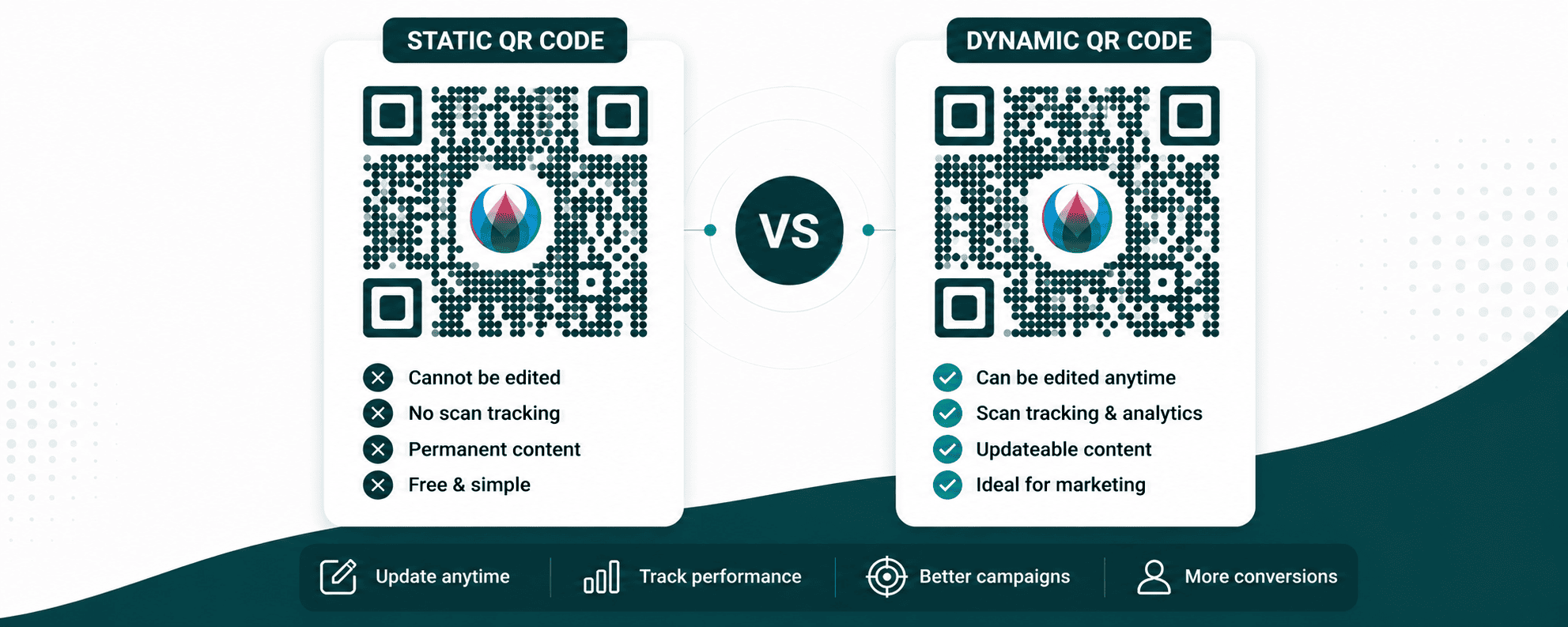
| Feature | Static QR Code | Dynamic QR Code |
|---|---|---|
| Editable After Creation | No | Yes |
| Analytics Tracking | No | Yes |
| Scan Tracking | No | Yes |
| Best for Marketing | Limited | Excellent |
| Free Option | Usually Yes | Sometimes |
| Redirect Capability | No | Yes |
| Campaign Flexibility | Low | High |
| Real-Time Updates | No | Yes |
When Should You Use Static QR Codes?
Static QR codes are best when:
- content never changes
- analytics are unnecessary
- budget is limited
- simplicity matters
Best Static QR Code Use Cases
Business Cards
Contact details usually remain stable.
Home WiFi Sharing
Perfect for quickly sharing WiFi credentials.
Personal Websites
Useful for portfolios and resumes.
Permanent Product Information
Suitable for fixed documentation.
When Should You Use Dynamic QR Codes?
Dynamic QR codes are best when:
- campaigns change frequently
- tracking is important
- businesses need flexibility
- marketing optimization matters
Best Dynamic QR Code Use Cases
Restaurant Menus
Restaurants frequently update prices and items.
Dynamic QR codes allow instant updates.
Marketing Campaigns
Businesses can:
- change landing pages
- update promotions
- monitor performance
Without changing printed materials.
Product Packaging
Manufacturers can update:
- instructions
- promotions
- support pages
Anytime.
Real Estate
Agents can update:
- listings
- virtual tours
- pricing
- contact details
Without reprinting signs.
Events
Event organizers can update:
- schedules
- speaker information
- venue details
- announcements
Instantly.
Why Businesses Prefer Dynamic QR Codes
Most professional businesses now prefer dynamic QR codes because they provide:
- flexibility
- analytics
- campaign optimization
- long-term scalability
Marketing teams rely heavily on data and tracking.
Dynamic QR codes provide valuable insights that static QR codes cannot.
Are Dynamic QR Codes Better for SEO?
QR codes themselves do not directly improve SEO rankings.
However, dynamic QR codes help businesses:
- track campaign performance
- optimize landing pages
- improve engagement
- increase conversions
This indirectly supports digital marketing growth.
Are Dynamic QR Codes Safe?
Yes, dynamic QR codes are generally safe when created using trusted QR platforms.
Businesses should:
- use HTTPS links
- monitor redirects
- avoid suspicious providers
- protect analytics dashboards
Users should:
- verify destinations
- avoid suspicious QR codes
- check preview URLs
Common Mistakes Businesses Make
Many businesses choose the wrong QR code type.
Mistake 1: Using Static QR Codes for Marketing
This creates problems later when campaigns need updates.
Mistake 2: Printing Without Testing
Always test QR codes before:
- printing
- publishing
- advertising
Mistake 3: Ignoring Analytics
Tracking helps improve performance.
Businesses lose valuable insights without dynamic QR analytics.
Mistake 4: Using Low-Quality QR Images
Blurry QR codes reduce scan success.
Always use high-resolution formats.
How to Choose the Right QR Code Type
Ask yourself these questions:
Will the Content Change Later?
If YES:
- use dynamic QR codes
If NO:
- static QR codes may work
Do You Need Analytics?
If YES:
- dynamic QR codes are necessary
Are You Running Marketing Campaigns?
If YES:
- dynamic QR codes are highly recommended
Is Budget Your Main Concern?
If YES:
- static QR codes are cheaper
Future of Dynamic QR Codes
Dynamic QR technology continues growing rapidly.
Businesses increasingly rely on:
- personalized QR campaigns
- advanced analytics
- AI-powered targeting
- smart packaging
- omnichannel marketing
Dynamic QR codes are becoming essential for modern digital experiences.
Final Thoughts
Understanding the difference between static and dynamic QR codes is extremely important for businesses and marketers.
Static QR codes are simple, permanent, and cost-effective for basic use cases.
Dynamic QR codes provide:
- flexibility
- analytics
- campaign management
- real-time updates
- advanced marketing capabilities
For professional business use, dynamic QR codes are usually the better long-term solution.
As QR code usage continues to grow worldwide, businesses that use the right QR strategy will improve customer engagement, marketing performance, and digital experiences.
If you want to create professional static or dynamic QR codes with customization and analytics, DigitalQR makes it easy to get started.